
Combined fractional CO2 laser with topical tioconazole vs. Q-switched Nd-YAG laser in the treatment of onychomycosis: A randomized comparative trial
Dr. J V Manjunath
M.B.B.S. M.D. (SKIN & V.D.)
Naik Skin Clinic
Bangalore
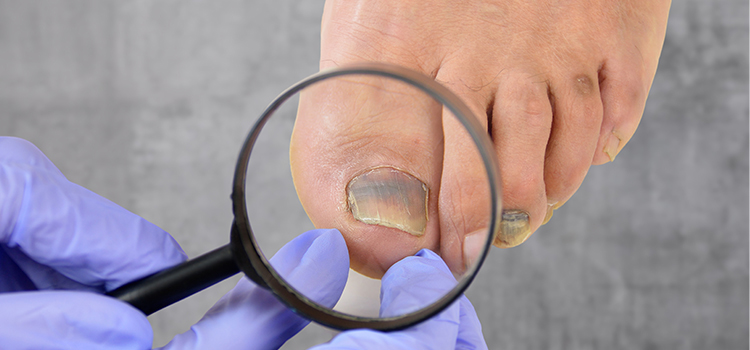
Onychomycosis (OM), a fungal nail infection, has an estimated global prevalence of 5.5% and can significantly impact the quality of life by causing discomfort and social limitations. The standard treatment for OM involves topical and oral therapies or a combination of both. However, topical agents often have limited nail penetration, and oral treatments may lead to systemic side effects due to the prolonged duration required to achieve therapeutic effects. Tioconazole, a synthetic imidazole antimicrobial agent, is commonly used to treat nail infections. A 28% nail solution is formulated for application twice daily over an extended period, typically at least six months, and is generally well tolerated.
A randomized comparative trial was conducted to evaluate the clinical efficacy and safety of combining fractional CO2 laser therapy with topical tioconazole. Patients were randomized to receive either fractional CO2 laser combined with topical tioconazole or Q-Switched Nd: YAG 1064 nm laser every 2 weeks for 3 months, followed by a 1-month follow-up assessment. The onychomycosis severity index (OSI) score, the Dermatology life Quality Index (DLQI) score, the patient satisfaction score, dermoscopic evaluation and KOH examination were used to assess improvement.
• OSI scores: OSI showed improvement after treatment in both arms [from 16.17 to 10.92 in the fractional CO2 arm (p=0.026) and 23.13 to 22.43 (p=0.92)]. When comparing both groups, the OSI score significantly reduced in the fractional CO2 laser combined with tioconazole more than in the Q-switched laser group (p=0.002).
• DLQI score: Improved in both groups. There was no statistically significant difference between the two groups.
• Patient satisfaction score: Significantly improved in both groups.
• Mycological cure (KOH examination): No significant difference between groups (p<0.05)
Fractional CO2 laser combined with topical tioconazole is more efficient in the treatment of onychomycosis than the Q-Switched Nd: YAG 1064 nm laser group as regards clinical improvement, but both have comparable effects on mycological cure. Their use as adjuvant treatment rather than alone is recommended to ensure a mycological cure for onychomycosis.
Reference: Sayed K, Khaled M, Gad A, et al. Combined fractional CO2 laser with topical tioconazole versus Q-switched Nd-YAG laser in the treatment of onychomycosis; a randomized comparative trial. Lasers Med Sci. 2024;39(1):274.