

Pityriasis alba is a prevalent and benign dermatological condition predominantly affecting children and adolescents. This skin disorder is often considered a minor manifestation of atopic dermatitis and is typically associated with a history of atopy in most individuals. Pityriasis alba is characterized by ill-defined macules and patches (or thin plaques), generally circular or oval, often with mild scaling and occasional pruritus (Figure 1). The lesions are usually found on the face, especially the cheeks, arms, and upper trunk, and are more prominent in individuals with darker skin types. Initially, the lesions may exhibit mild erythema and gradually transition to a hypopigmented state over time. Sun exposure can accentuate the appearance of these lesions, which may often raise concerns regarding their cosmetic impact on patients or parents of children. However, pityriasis alba follows a spontaneous, self-resolving course, gradually restoring normal skin pigmentation. As various skin conditions share similarities with pityriasis alba, making a precise diagnosis is crucial.
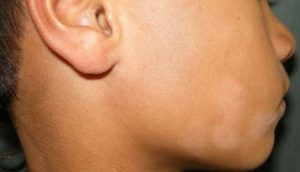
Differential diagnosis of Pityriasis alba
Nevus depigmentosus

Distinguishing characteristics: Segmental distribution, typically occurring on the trunk, with no change in size or number over time
Psoriasis
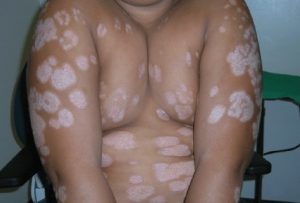
Distinguishing characteristics: The early erythematous lesions may resemble pityriasis alba, but the sparing of elbows, knees, and scalp, along with the absence of salmon-colored scales, helps exclude this diagnosis
Vitiligo
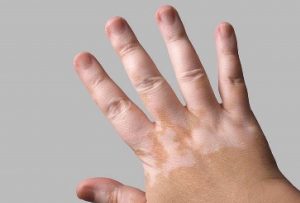
Distinguishing characteristics: Complete loss of pigmentation. Lesions tend to favor periocular and perioral sites.
Accurately distinguishing pityriasis alba from similar hypopigmented conditions is essential, as its subtle features can closely mimic other disorders. Recognizing its characteristic ill-defined patches, mild scaling, and typical distribution helps clinicians avoid misdiagnosis and select appropriate, conservative management.
Reference:
- Givler DN, Saleh HM, Givler A. Pityriasis Alba. [Updated 2024 Jan 25]. In: StatPearls [Internet]. Treasure Island (FL): StatPearls Publishing; 2025 Jan-. Available from: https://www.ncbi.nlm.nih.gov/books/NBK431061/.
Expert opinion – Dr. Nithin S U
Pityriasis alba is a common, benign dermatological condition predominantly affecting children and adolescents and is often regarded as a mild manifestation of atopic dermatitis, frequently associated with a history of atopy. It presents as ill-defined, circular or oval hypopigmented macules or thin plaques with mild scaling and occasional pruritus, sometimes preceded by faint erythema. Lesions most commonly involve the face—particularly the cheeks—and less frequently the arms and upper trunk. They tend to be more noticeable in individuals with darker skin types and following sun exposure, which can accentuate the contrast with surrounding skin and raise cosmetic concerns among patients or parents. Despite its appearance, pityriasis alba is a self-limiting condition that gradually resolves with restoration of normal pigmentation. As several dermatological conditions may mimic its presentation, accurate diagnosis remains important to ensure appropriate reassurance and management.