

Autologous cell harvesting device provides repigmentation and improves quality-of-life for patients with stable vitiligo lesions in a large and diverse patient population
Dr. Abhishek R Shetty
MBBS, MD Dermatology
Shetty’s Skin and Hair Clinic
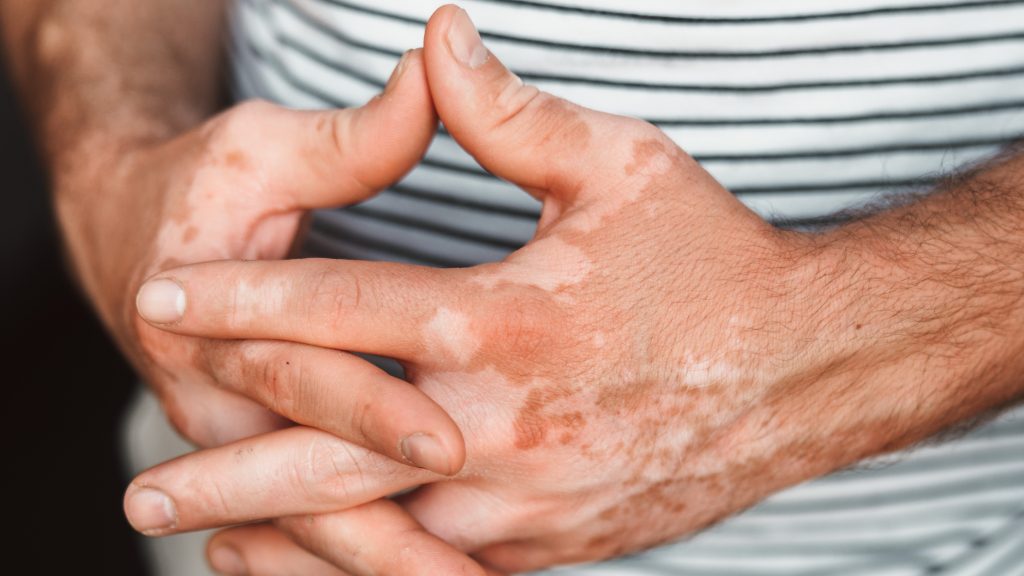
A cell harvesting device that prepares autologous skin cell suspension (ASCS) offers a simple yet accessible technique for melanocyte transplantation in patients with vitiligo, a study has shown.
“ASCS is highly effective for repigmentation of stable vitiligo lesions, with positive patient-reported outcomes (PROs) and improvement in quality of life (QoL),” the researchers said.
A total of 107 patients were included in this large, prospective, multicentre study that sought to confirm early and favourable repigmentation response and evaluate health-related QoL changes following ASCS treatment of stable vitiligo. Laser ablation was performed in vitiligo lesions, as well as ASCS treatment, followed by at-home phototherapy.
All Fitzpatrick skin types and major vitiligo subtypes were represented in this study. By week 4, the researchers observed excellent repigmentation response (≥80%) among participants.
Furthermore, all lesions showed improvement by week 24. Of these, 67% achieved >50% repigmentation, 42% achieved ≥80% repigmentation, and 8% achieved complete repigmentation. Moreover, 27.7% of lesions attained Vitiligo Noticeability Scale (VNS) response. Most patients (72.3%) expressed satisfaction with their treatment. Significant improvements were also observed from baseline in Vitiligo Quality-of-Life Instrument (p<0.05) at week 24. Three factors supported the effectiveness of ASCS treatment: positive patient feedback (67.3% stated treatment response was met or exceeded expectations), patient satisfaction (72.3% were somewhat to very satisfied), and VNS response (27.7% rated their vitiligo lesions a lot less or no longer noticeable).
In the validation study, VNS scores could worsen initially because of temporary hyperpigmentation, which affects colour matching. Thus, VNS scores are best assessed when hyperpigmentation has been resolved.
The patients received ongoing phototherapy and continued concomitant treatments post-ASCS treatment. Therefore, week-24 VNS assessments were not conducted in a timeframe that allowed for hyperpigmentation to resolve, suggesting VNS response rates may improve with a longer evaluation period.
Few patients in the current study reported receiving treatment for depression or anxiety at baseline. However, there were reductions seen in mental health resources and treatment utilization at week 24.
Future studies should assess QoL outcomes later post-treatment and include a larger sample with a higher baseline prevalence of depression and mental health resource use to better evaluate changes,” according to the researchers. Additionally, repigmentation response in certain patients can be improved by combination therapy, which addresses different pathogeneses. Almost half of patients reported concomitant vitiligo therapy, including 37.4% who reported topical Janus kinase inhibitor use, 6.5% topical steroid use, and 6.5% topical calcineurin inhibitor use. Of those patients, 61.7% achieved >50% repigmentation at week 24. The limitation of the study was the absence of a control group.
The cell harvesting device provides a simplified, more accessible technique for melanocyte transplantation. ASCS is highly effective for repigmentation of stable vitiligo lesions, with positive patient-reported outcomes and improvement in quality-of-life, as demonstrated in this large, diverse population.
Reference: Pandya AG, Mahmoud BH, Huggins RH, et al. Autologous cell harvesting device provides repigmentation and improves quality-of-life for patients with stable vitiligo lesions in a large and diverse patient population. J Am Acad Dermatol. 2025;93(2):378–386.