

Emollients to prevent pediatric eczema: A randomized clinical trial.
Dr. Archanna Gullur
MD
Tatva Dermaaessthetics
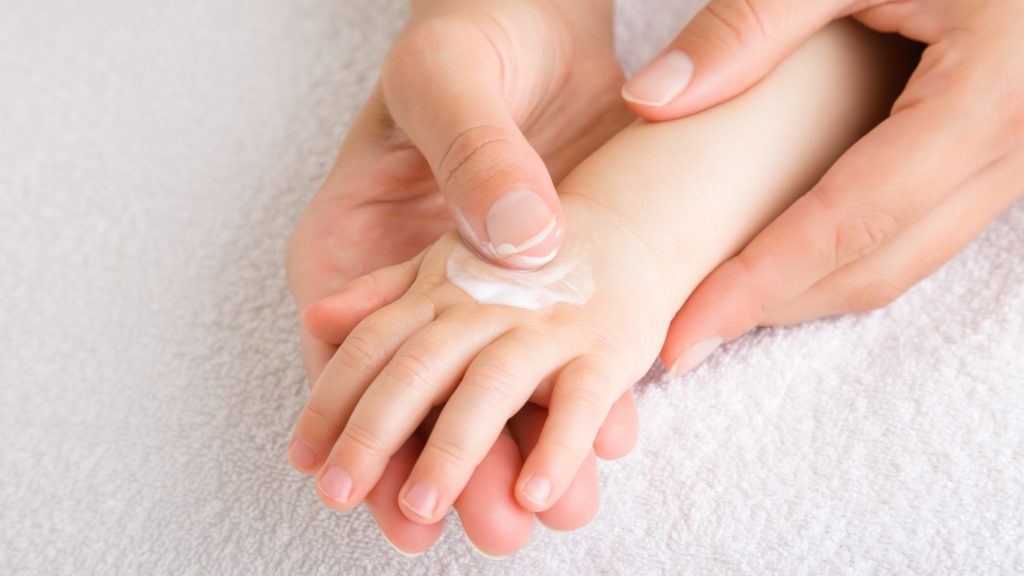
Daily emollient application in infants helps reduce the cumulative incidence of atopic dermatitis throughout the 2 years of life and may be a feasible way to reduce its burden in communities, according to a study.
The study included 1,247 infant–parent pairs (mean age of infants at baseline 23.9 days, 44.3% female) recruited across 25 community-based paediatric and family medicine clinics. These pairs were randomly allocated to the group instructed to apply a daily emollient moisturizer to the full body of the infant, beginning at 9 weeks of age or the group that refrained from emollient use.
The primary outcome was physician-diagnosed AD by age 24 months. All participants completed quarterly electronic surveys. These surveys were used to document adverse events and alert the team if an AD diagnosis had been made.
At 24 months, the cumulative incidence of AD was 36.1% in the daily moisturizer group vs. 43% in the control group. Daily emollient application was associated with a 16% reduced risk of AD within 2 years of life (relative risk [RR], 0.84, 95% confidence interval [CI], 0.73–0.97; p=0.02).
Of note, the magnitude of effect of daily emollient application was more pronounced in the population not at high risk of AD (RR, 0.75, 95% CI, 0.60–0.90; p=0.01). Additionally, the presence of a dog in the home modified the protective effect of daily emollient application (RR, 0.68, 95% CI, 0.50–0.90; p=0.01).
There were no differences observed in cutaneous adverse events between the daily moisturizer and control groups.
Daily emollient application from before 9 weeks of age reduced atopic dermatitis incidence by 24 months in infants not selected for risk, suggesting a simple, feasible strategy to lessen its burden.
Reference: Simpson EL, Michaels LC, Ramsey K, et al. Emollients to prevent pediatric eczema: A randomized clinical trial. JAMA Dermatol. 2025:e252357.