

Atopic dermatitis (AD) is a prevalent inflammatory skin condition marked by recurring eczematous lesions and intense itching. It affects individuals across all age groups and ethnicities, significantly impacting the psychosocial well-being of both patients and their families. AD is also the leading contributor to the global burden of skin diseases.1
In infantile AD (birth to 6 months), lesions are exudative, erythematous, and appear as weepy papules and plaques. Common sites include the scalp, face, trunk, and extensor surface. In children with AD (6 months to 12 years), lesions include weepy, erythematous papules and plaques, often mixed with lichenified plaques, primarily located in flexural areas. Affected sites include the antecubital and popliteal fossae, wrists, and neck. In adolescents and adults with AD (>12 years), lesions present as erythematous papules and plaques with xerotic scale and crust, along with lichenified plaques in flexural areas. Common locations are the hands, flexural surfaces, and upper trunk.2
At times, patients diagnosed with AD may show atypical features that require the clinician to consider other possible diagnoses. In such cases, understanding the clinical signs associated with AD and recognizing alternative conditions is crucial, as treatment and prognosis may vary.2
Differential diagnosis of atopic dermatitis
Seborrheic dermatitis
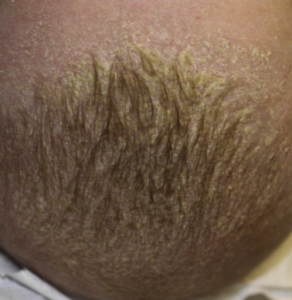
Distinguishing characteristics: Pruritus ranges from absent to mild-moderate, with salmon-pink fine papules that merge into poorly defined plaques, often accompanied by variable greasy scaling. Lesions typically affect the face, scalp, and extensor surfaces in infants; flexural areas in children; and may involve the trunk and nails.3
Psoriasis
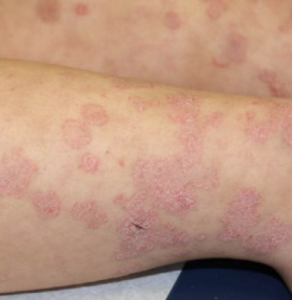
Distinguishing characteristics: Mild-to-moderate pruritus is present. Lesions appear as well-demarcated pink plaques with adherent silvery scales, or as confluent bright red plaques with sharply defined borders and relatively little scaling. Commonly affected areas include the extensor surfaces of joints (elbows, knees), extremities, retroauricular folds, axillae, umbilicus, diaper area, inguinal folds, genitalia, gluteal cleft, and nails.3
Allergic contact dermatitis
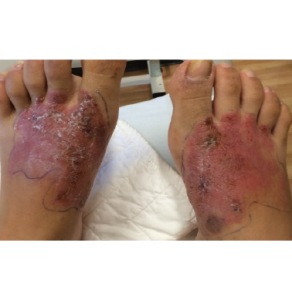
Distinguishing characteristics: Severe pruritus is present, with geometric, erythematous, eczematous, and weepy plaques appearing in areas of exposure.3
Scabies
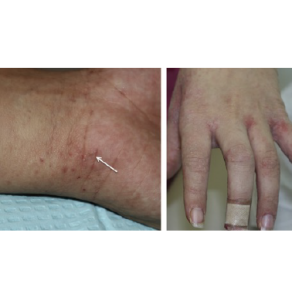
Distinguishing characteristics: Severe nocturnal pruritus, with poorly defined erythematous papules, nodules, burrows, pustules, and vesicles on the wrists, interdigital spaces, axillae, umbilicus, nipples, and diaper area.3
Mycosis fungoides
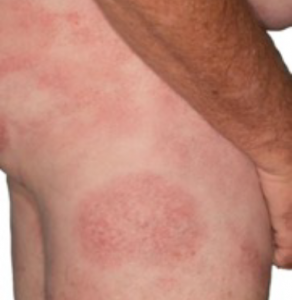
Distinguishing characteristics: Pruritus with erythematous patches, papules, or plaques that show subtle scaling. Lesions may be polycyclic or annular, and hypopigmented patches with fine scaling are often seen on the buttocks, lower trunk, thighs, breasts, and groin.3
Dermatomyositis
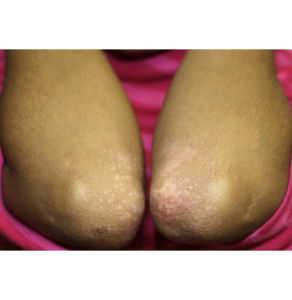
Distinguishing characteristics: Myositis presents with violaceous to erythematous flat-topped papules with fine scale, typically over the elbows and knees (Gottron sign), as well as over the distal and proximal interphalangeal joints (Gottron papules).2,3
Pityriasis lichenoides chronica
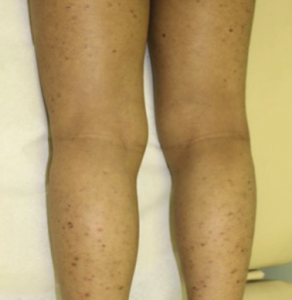
Distinguishing characteristics: Recurrent clusters of multiple small erythematous to red-brown papules and plaques with central scaling, commonly affecting the trunk and proximal extremities.2
Actinic prurigo
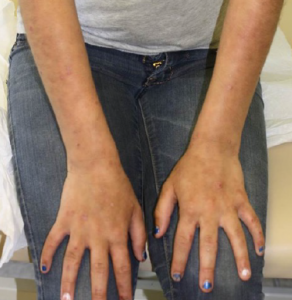
Distinguishing characteristics: Erythematous papules and lichenified plaques appear on photo-exposed areas, such as the face and lips.2
AD is a common chronic inflammatory skin condition that affects all age groups, though it is most frequently seen in childhood. At times, patients may present with skin eruptions that resemble AD. Understanding the distinguishing features of both AD and its differential diagnoses is important for clinicians managing the condition.
References:
- Langan SM, Irvine AD, Weidinger S. Atopic dermatitis. Lancet. 2020;396(10247):345–360.
- Wollenberg A, Werfel T, Ring J, et al. Atopic dermatitis in children and adults—diagnosis and treatment. Dtsch Arztebl Int. 2023;120(13):224–234.
- Barrett M, Luu M. Differential diagnosis of atopic dermatitis. Immunol Allergy Clin North Am. 2017;37(1):11–34.
- El Hachem M, Di Mauro G, Rotunno R, et al. Pruritus in pediatric patients with atopic dermatitis: A multidisciplinary approach – summary document from an Italian expert group. Ital J Pediatr. 2020;46(1):11.
- Brumfiel CM, Patel MH, Puri P, et al. How to sequence therapies in mycosis fungoides. Curr Treat Options Oncol. 2021;22(11):101.
Expert opinion – Dr. Ramesh Munishamappa
Atopic dermatitis is a common condition in both children and adults, characterized by severe pruritus, scaling, and lichenified papules or plaques, with mild exacerbations and remissions—often worse in winter and, in some individuals, in summer. In certain patients, there is a family history of atopy, such as asthma, hay fever, or allergic rhinitis.
Infantile AD typically occurs in young infants up to 2–3 years of age, with lesions appearing on the cheeks and extensor surfaces of the arms or forearms. In adolescents, the condition more often involves the flexural areas. Most cases present with severe pruritus and lichenified lesions affecting these flexural regions.
It is important to differentiate atopic dermatitis from other similar conditions, including seborrheic dermatitis, psoriasis, pityriasis rosea, scabies, and allergic contact dermatitis.