

Nevus depigmentosus (ND syn. nevus achromicus) is a rare congenital pigmentary disorder first described by Lesser in 1884. It is an uncommon birthmark (nevus) classically defined as a congenital nonprogressive hypopigmented macule, stable in size and distribution. The condition is usually limited to the skin but sometimes may be associated with seizures, intellectual disability, unilateral limb hypertrophy, atopic dermatitis, and abnormal systemic features. It is a circumscribed area of depigmentation that might not be apparent at birth and may continue to appear until adulthood. Individuals belonging to all races and sexes can be affected. It increases in size with the growth of the body, reaching its maximum dimensions and usually remains stable throughout life thereafter. The lesion is solitary, several centimeters in diameter, with irregular but well-defined serrated borders that do not cross the midline. Often smaller macules arise around the edge giving it a “splashed paint” appearance (Figure 1).
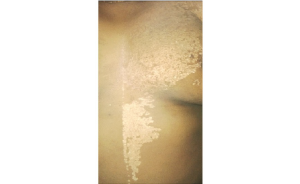
Differential diagnosis of nevus depigmentosus
Vitiligo
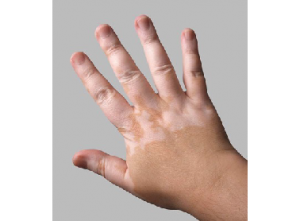
Distinguishing characteristics: Absence of melanocytes, negative 3,4-dihydroxyphenylalanine reaction, chalky white appearance on Wood’s lamp examination, koebnerization seen
Hansen’s disease
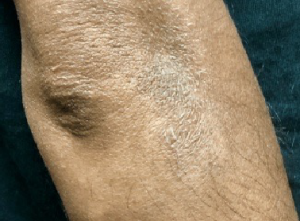
Distinguishing characteristics: Loss of sensation, presence of acid-fast bacilli, characteristic histopathology
Piebaldism
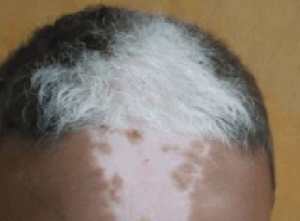
Distinguishing characteristics: White forelock with depigmented polygonal patch.
Nevus depigmentosus is a benign congenital pigmentary disorder that can cause significant psychological morbidity among both parents and older patients alike. While thorough and gentle counseling is often sufficient, various treatment modalities may be tried if the patient desires. Careful clinical examination and relevant investigations must be carried out in patients presenting with extensive lesions and in those with internal manifestations, especially involving the nervous and musculoskeletal systems.
Reference:
- Deb S, Sarkar R, Samanta AB. A brief review of nevus depigmentosus. Pigment Int. 2014;1:56–58.
Expert opinion – Dr. A G Chandrashekara
Today, I would like to discuss nevus depigmentosus, a relatively uncommon congenital pigmentary disorder that presents as stable, non-progressive hypopigmented macules or patches with irregular yet well-defined borders. These lesions are typically present from birth or early childhood and tend to enlarge proportionately with the patient’s growth while maintaining their relative distribution. Clinically, they may exhibit a characteristic ‘splashed paint’ appearance. Although the condition is generally limited to the skin and benign in nature, occasional associations with systemic abnormalities have been reported, highlighting the importance of a comprehensive clinical evaluation. Accurate diagnosis is essential, as nevus depigmentosus can mimic other hypopigmentary disorders such as vitiligo, Hansen’s disease, and piebaldism, each requiring distinct diagnostic and management approaches.