

The burden of vitiligo is underestimated, as many cases likely go underrecognized, undiagnosed/misdiagnosed, and undertreated, due in part to pervasive misconceptions about vitiligo, such as the beliefs that vitiligo cannot be treated effectively and that it is essentially “cosmetic” in nature.
An expert panel of 10 Canadian dermatologists provided generally accepted principles, consensus recommendations, and a treatment algorithm for the management of vitiligo that reflect the changing vitiligo treatment landscape.
Assessment tools
In routine clinical practice, clinicians often use rapidity of disease progression, disease extent and distribution (including involvement of visible and sensitive sites), and disease effect on QoL, as well as patient motivations and preferences, to guide management. Although Dermatology Life Quality Index (DLQI) and Children’s DLQI (CDLQI) are health-related quality-of-life (QoL) assessment tools that have been validated in vitiligo, they do not holistically capture its burden on patients.
Management of vitiligo
Effective management of vitiligo can be aided by facilitating patient awareness of measures that can be taken to reduce the risk of progression. The treatment goals are described in Figure 1, and the treatment algorithm is described in Figure 2.
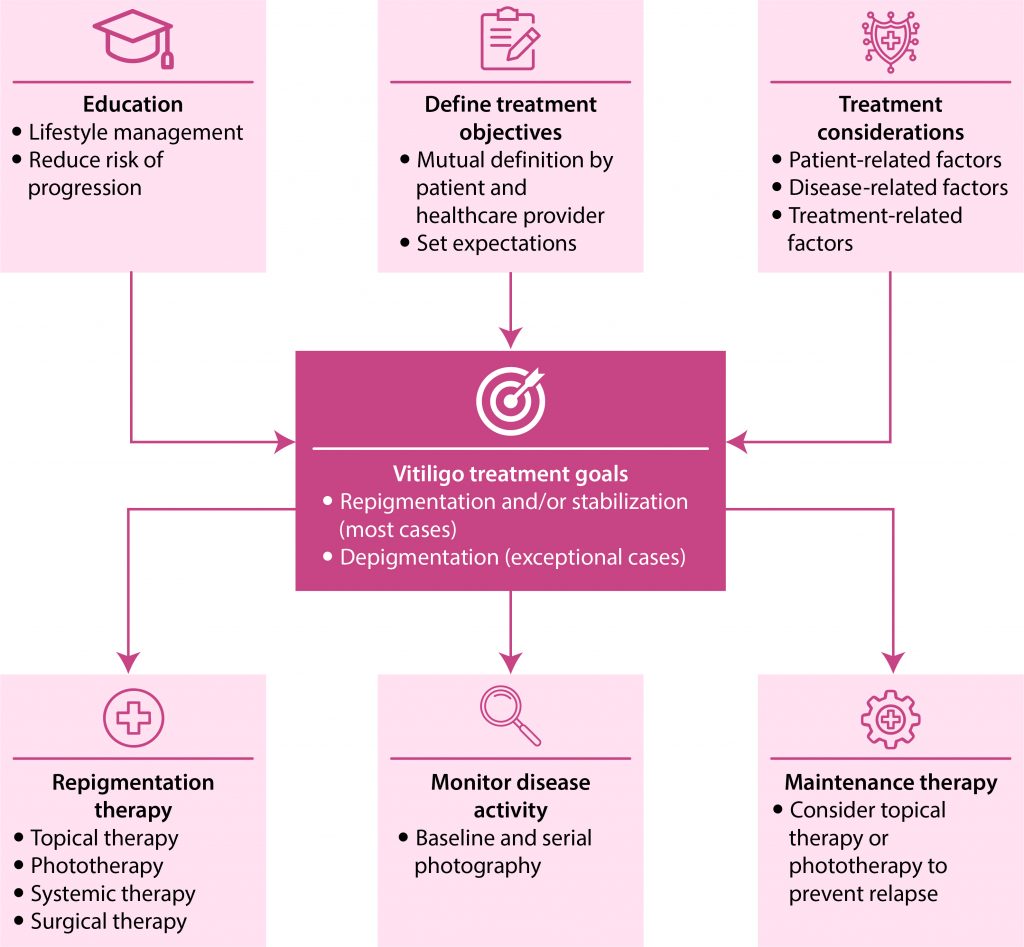
Figure 2. Algorithm for the management of vitiligo (nonsegmental) in children, adolescents, and adults
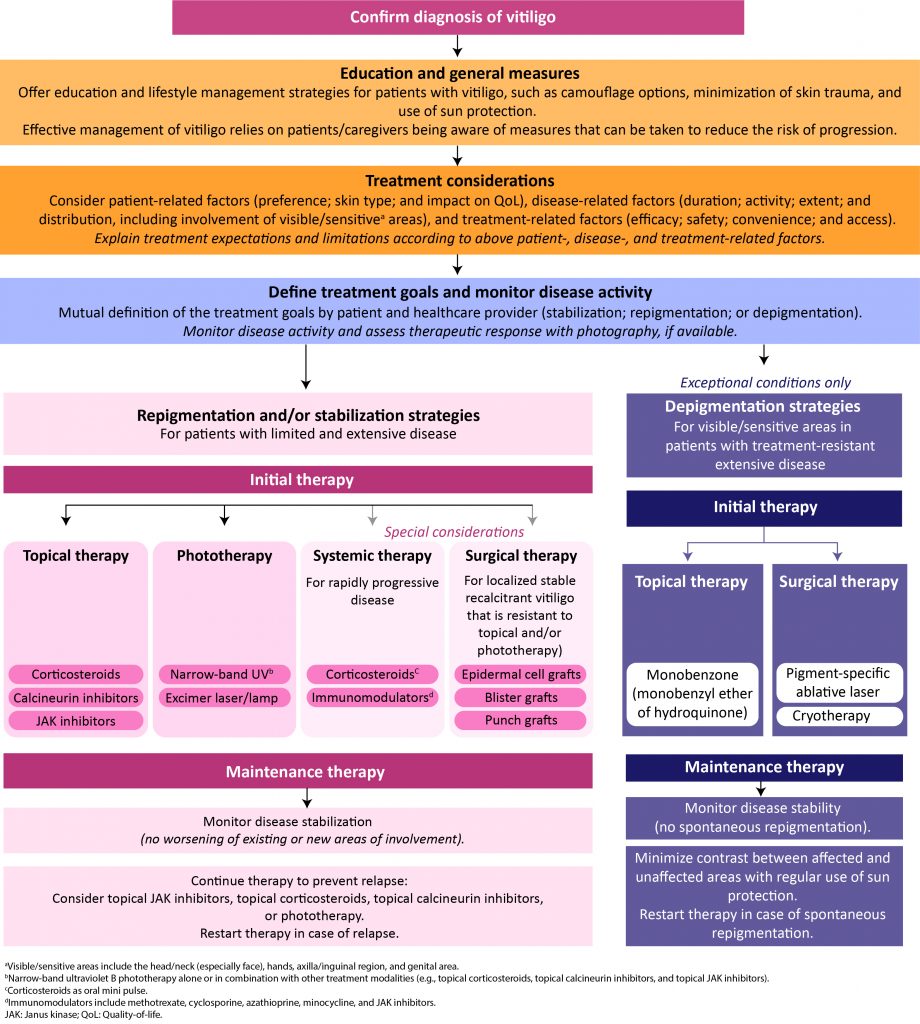
Reference: Prajapati VH, Liu H, Miller-Monthrope Y, et al. Canadian consensus guidelines for the management of vitiligo. Dermatol Ther (Heidelb). 2025;15(6):1351–1369.