

Alopecia areata (AA) is a long-term condition that can occur in both children and adults. AA can appear as patches of baldness on the scalp. Sometimes, nail growth is also affected. Hair on other parts of the body may also fall out, such as the beard, eyebrows and eyelashes. Hair follicles are preserved in AA, therefore the potential for recovery of hair growth is maintained, although recovery rates may diminish in long-standing disease.
Severity of disease
The AA severity definitions used in this living guideline are based primarily on the extent of scalp hair loss, with limited (mild) hair loss representing 1–20% scalp involvement, moderate hair loss representing 21–49% scalp involvement and severe hair loss representing 50–100% scalp involvement.
Rapidly progressive AA is defined here as progressive scalp hair loss of sudden onset, associated with increased hair fall and generalized positive hair pull test and/or trichoscopic features of active disease (e.g., exclamation-mark hairs, black dots, etc.).
Diagnosis of AA
The diagnosis of AA is usually based on the clinical presentation and typical examination findings. It is recommended to undertake a full history for people with AA, including the site and type of AA, disease extent, disease stability, age of onset, speed of progression, triggering factors, quality-of-life, psychological and psychosocial impact, maximum severity experience and personal and family history of other autoimmune diseases. It is also recommended to perform the Severity of Alopecia Tool (SALT) assessment routinely in people with AA with scalp involvement as a validated outcome measure to assess treatment response over time.
Treatment of AA
As treatment of AA takes time, it is important that the therapeutic trial is of sufficient duration to allow a treatment response, but not so long as to be futile and increase the risk of side-effects. Conventionally, treatments in AA are continued for ≥6 months, but are stopped if there is an insufficient response. Ultimately, the aim of treatment is complete terminal hair regrowth on the scalp and any other body site affected.
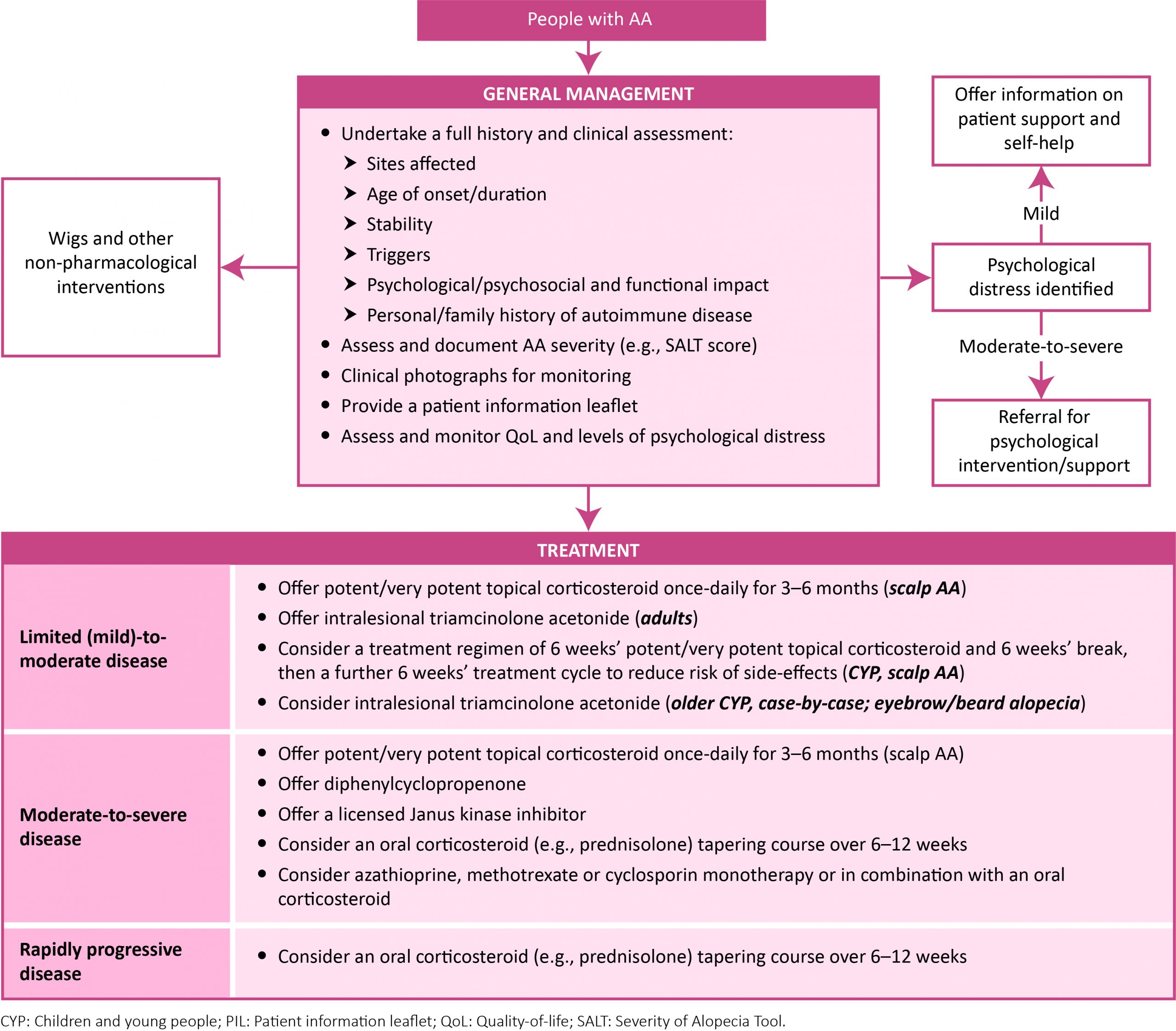
It is important to exercise caution when treating people with AA with Fitzpatrick V and VI skin tones with topical and/or intralesional corticosteroids and contact immunotherapy due to the increased risk of skin depigmentation with corticosteroid treatment and the risk of developing vitiligo, as well as localized skin hyper- or hypopigmentation, with contact immunotherapy. The management algorithm is described in Figure 1.
Figure 1. Management pathway for people with alopecia areata
Reference: Harries MJ, Ascott A, Asfour L, et al. British Association of Dermatologists living guideline for managing people with alopecia areata 2024. Br J Dermatol. 2025;192(2):190–205.