

Subdermal Laser-Assisted Scar Subcision (SLASS) combined with fractional CO2 laser for acne scars: Efficacy evaluation
Dr. Vinayak Venkatesh
MBBS, MD (Skin & S.T.D)
Chinmaya Mission Hospital, Indra Nagar
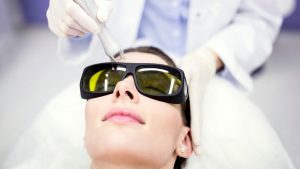
Rolling atrophic acne scars are formed when the deeper dermis becomes tethered to the underlying muscular–fascial layer by fibrous bands. Subcision is the most widely used treatment for these scars, but traditional tools can be difficult to handle, painful, and associated with side effects such as bruising, prolonged recovery, and even nerve injury. Therefore, new alternative approaches are needed. Additionally, many patients seek treatment years after their acne has resolved, at which point atrophic scars often coexist with facial skin laxity and sagging.
In this article, the authors introduce an alternative to conventional subcision techniques: subdermal laser-assisted scar subcision (SLASS) using a 1470-nm diode fiber laser. Although previously explored in a small pilot study, Alegre-Sánchez A, et al. now present a larger patient series, along with updated device parameters and a more detailed explanation of the technique. They also propose, for the first time, combining SLASS with a traditional acne scar treatment—ablative fractional CO₂ laser. The goal was to evaluate the safety and efficacy of this combined approach for rolling acne scars. The subdermal laser component can have dual benefits: thermomechanical subcision of fibrotic bands and improvement of skin laxity, producing a subtle lifting effect.
The study reports a retrospective analysis of 42 patients treated in a single session with both subdermal laser subcision and fractional CO₂ laser. Subcision was performed using 400-μm fibers from a 1470-nm diode laser, delivering 100–200 J per 2 cm² at 3–4 W in pulsed mode with 15–25 ms pulses. Following this, fractional CO₂ laser resurfacing was applied, with settings adjusted to scar depth (40–50 W peak power, 1–1.5 ms dwell time, and 20%–30% density).
The mean ECCA (échelle d’évaluation clinique des cicatrices d’acné) score before treatment was 172.02±40.8. After treatment, this decreased to 79.40 ± 24.35, representing a mean reduction of 92.6±34.3 points (p<0.05). Using the SCAR-S scale (0=clear; 5=very severe), the average score improved by 1.67 points, from 4.02±0.74 before treatment to 2.36±0.87 afterward (p<0.05). Both scales showed statistically significant improvements following treatment.
Patients also reported a high level of satisfaction, with a mean subjective improvement score of 7.02±1.3 on a 1–10 scale. Treatment efficacy and safety did not differ by sex, age, or skin phototype.
No severe adverse effects were observed. Typical downtime consisted of 5–7 days of swelling, edema, and crusting, primarily related to the CO₂ laser component. A few patients experienced mild paresthesia for several weeks after SLASS, but no motor nerve complications occurred.
A new combined approach using energy-based devices is introduced for the treatment of rolling acne scars. The authors propose the term SLASS as an umbrella concept describing the use of fiber lasers beneath the dermis to release the fibrous bands responsible for rolling scars and to stimulate deep-dermal remodeling.
Reference: Alegre-Sánchez A, Suárez-Valle A, Fernández-Nieto D, et al. Subdermal Laser-Assisted Scar Subcision (SLASS) combined with fractional CO2 Laser for acne scars: Efficacy evaluation. J Cosmet Dermatol. 2025;24(5):e70219.