

Roflumilast Foam, 0.3%, for psoriasis of the scalp and body: The ARRECTOR phase 3 randomized clinical trial
Dr. Abhiram Rayapati
MBBS, MD
iSkin Clinic
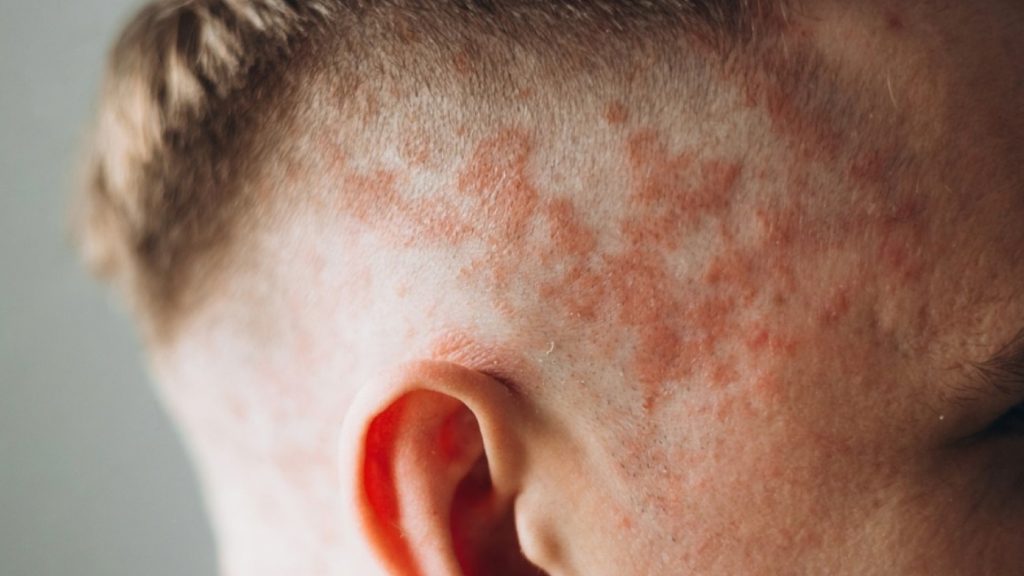
Treatment with once-daily roflumilast foam appears to improve the signs and symptoms of psoriasis of the scalp and body, with low rates of adverse events (AEs), according to the results of the phase III ARRECTOR trial.
The trial included 432 patients (mean age 47.3 years, 56.3% female) aged 12 years and older with plaque psoriasis affecting up to 25% of the scalp and body, at least 10% of the scalp, and up to 20% of non-scalp areas. The patients were randomly assigned to receive treatment with roflumilast foam (n=281) or vehicle (n=151), which was identical to the foam but without the active ingredient. Treatment was applied to all affected body areas, including the face, scalp, palms, soles, genitals, and intertriginous regions, for 8 weeks. Baseline patient characteristics were generally similar between the two treatment arms.
After 8 weeks of treatment, Investigator Global Assessment (IGA) success, defined as complete or near complete skin clearance plus a ≥2-grade improvement, occurred in significantly more patients on roflumilast foam vs. vehicle. Specifically, 66.4% vs. 27.8% of patients achieved IGA success for the scalp (p<0.001), and 45.5% vs. 20.1% achieved IGA success for the body (p<0.001).
Notably, treatment success with roflumilast appeared early in the treatment course. Compared with vehicle-treated patients, those who received the foam were more likely to achieve IGA success for the scalp at weeks 2 (30.4% vs. 11.7%; p<0.001) and 4 (53.8% vs. 19.5%; p<0.001). The same was true for IGA success for the body at week 4 (32.8% vs. 12.1%; p<0.001).
Most patients with psoriasis report substantial itch, with itch of the scalp being a predominant and bothersome site. In the study, roflumilast foam was associated with a greater likelihood of achieving success on the Scalp Itch−Numeric Rating Scale (SI-NRS) and the Worst Itch−NRS (WI-NRS), defined as a ≥4-point improvement in patients with baseline scores of ≥4, compared with vehicle. Improvements in itch were observed as early as 24 hours after initiation and throughout the 8 weeks of treatment, they added.
The proportion of patients in the roflumilast foam and vehicle arms with SI-NRS success was 25.2% vs. 8.0% at week 2 (p<0.001), 46.2% vs. 16.8% at week 4 (p<0.001), and 65.3% vs. 30.3% at week 8 (p<0.001). The corresponding proportion of patients with WI-NRS success was 23.3% vs. 10.9 % at week 2, 46.5% vs. 18.1 % at week 4, and 63.1% vs. 30.1 % at week 8 (p<0.001 for all).
This finding holds important implications, given that patients with plaque psoriasis who report persistent itch have significant increases in overall work impairment and reduced quality of life. In addition, patients with plaque psoriasis and moderate to severe itch report significantly more sleep disturbance than those with mild itch.
Furthermore, early improvement in patient-reported outcomes is advantageous because patient satisfaction with therapy can enhance adherence to treatment, particularly when the areas affected by psoriasis are difficult to treat.
As for safety, roflumilast foam was well tolerated, according to the investigators. Treatment-emergent AEs occurred in 26.7 % of patients in the roflumilast arm and in 16.6 % of those in the vehicle arm, with most being mild to moderate in intensity. Treatment-related AEs were documented in 5.7% and 2.0% in the respective treatment arms. The incidence of treatment-emergent serious AEs was low and similar between the roflumilast foam and vehicle arms (0.7% for both), as was that of AEs leading to discontinuation of the trial (1.8% and 1.3%, respectively).
Roflumilast foam and vehicle had similar investigator- and patient-rated local tolerability assessments,” the investigators noted. Roflumilast foam 0.3% was developed from the high-water-content formulation (approximately 48% water) of roflumilast cream 0.3% and includes the addition of a propellant. What sets this foam formulation apart from other topical foam formulations is the distinct excipients that maintain the skin barrier, the investigators explained.
Foam formulations are intended to make application to the scalp and other hair-bearing areas easier. In addition, using a single topical product suitable for both hair-bearing and nonhair-bearing regions is more convenient than using separate products for different body parts. The investigator- and patient-reported outcomes suggest that the foam formulation should help improve patient satisfaction, adherence to therapy, and quality-of-life.
This randomized clinical trial found that roflumilast foam, 0.3%, improved signs and symptoms of psoriasis on the scalp and body, including pruritus, with low rates of adverse events in patients 12 years and older. These results demonstrate the potential of roflumilast foam, 0.3%, as monotherapy for patients with psoriasis of the scalp and body.
Reference: Gooderham MJ, Alonso-Llamazares J, Bagel J, et al. Roflumilast foam, 0.3%, for psoriasis of the scalp and body: The ARRECTOR phase 3 randomized clinical Trial. JAMA Dermatol. 2025;161(7):698–706.